
Clearer Facility Communication
A better understanding of how signage, staff communication, policies, and visual messaging work together to support safer operations.
Join aquatic operations expert Kate Connell as she explores how signage, policies, staff interactions, adaptive communication tools, multilingual resources, and consistent operational practices work together to create safer and more welcoming aquatic environments.
Clear communication is a critical part of aquatic safety.
Signs matter, but they are only one piece of the system. Guests also rely on staff direction, visual cues, policies, symbols, accessibility tools, and consistent messaging to understand what is expected and how to navigate the facility safely.
When those pieces work together, communication becomes easier to understand, more inclusive, and more effective.
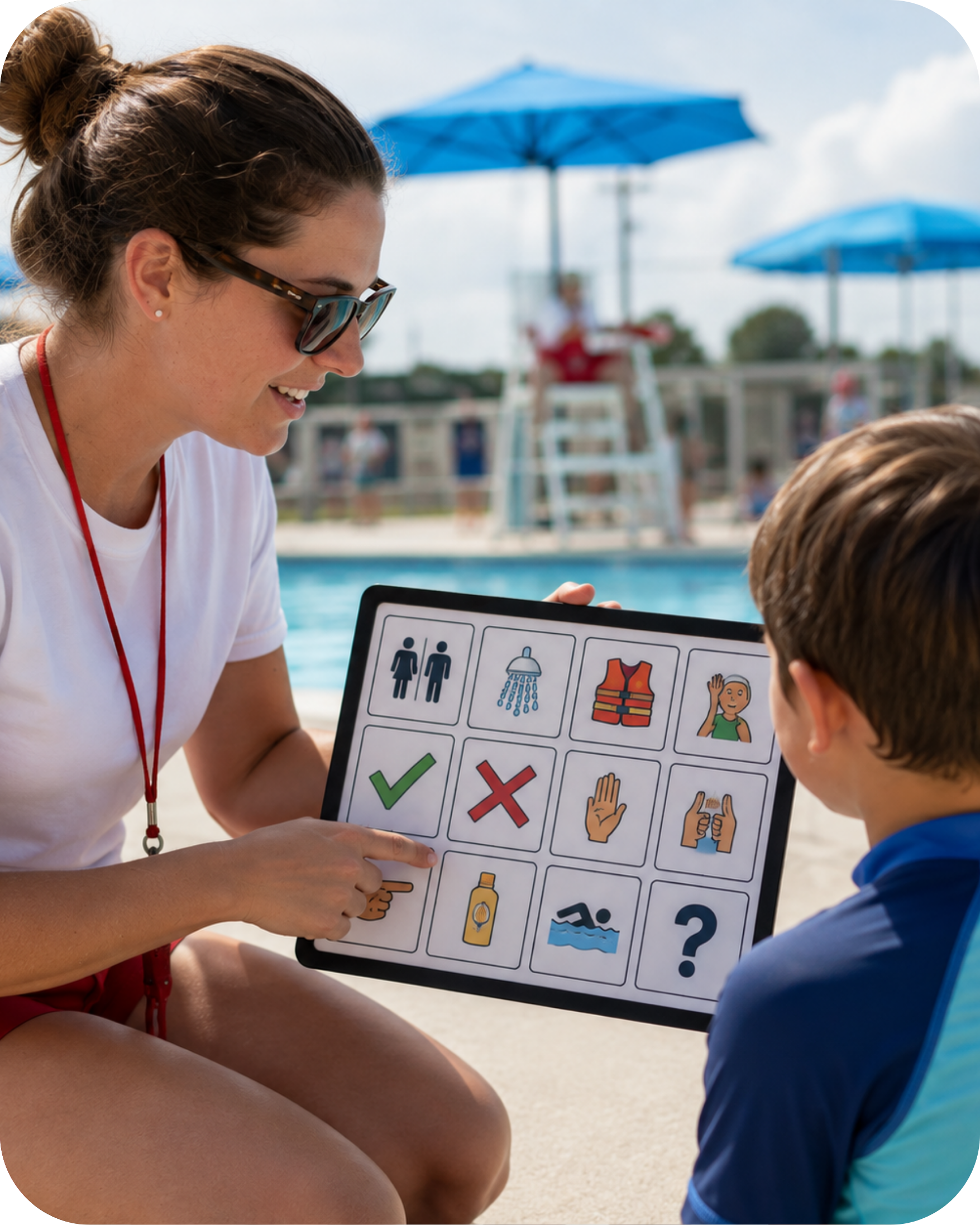
Aquatic facilities serve guests with different ages, abilities, languages, experiences, and communication needs. That can create challenges when important information is shared in only one way.
Common gaps can include:
This webinar explores how aquatic facilities can build communication systems that extend beyond traditional signage. You'll learn practical ways to make rules and expectations clearer, support accessibility, improve consistency, and create a better experience for both guests and staff.
A better understanding of how signage, staff communication, policies, and visual messaging work together to support safer operations.
Ideas for incorporating visual symbols, communication boards, adaptive tools, and multilingual resources into everyday operations.
Strategies for helping staff communicate rules, expectations, and policies clearly and consistently across shifts and interactions.
Practical ways to reduce confusion, improve understanding, and make aquatic environments easier for more guests to navigate.
A framework for using intentional communication to encourage compliance, reduce misunderstandings, and support safer aquatic environments.
Free registration • Live Q&A • Replay emailed to registrants
.png?width=1080&height=1350&name=Kate-strong-guards-strong-systems-webinar-lifeguard-tablet%20(2).png)
Kate Connell brings years of hands-on aquatic operations leadership experience, helping facilities build safer, more consistent systems that support both staff and patrons.
Her trainings focus on practical operational realities, not just theory, helping aquatic teams apply what they learn immediately on deck.
Join aquatic professionals from across the industry for this free live webinar.
Effective communication is one of the most powerful and often overlooked tools for creating safer, more welcoming aquatic environments. While signage plays an important role, truly effective communication extends beyond posted rules to include policies, staff interactions, visual messaging, adaptive communication tools, multilingual resources, and consistent operational practices.
In this session, participants will explore how aquatic facilities can build communication systems that improve safety, support accessibility, and create a better guest experience across pools, waterparks, and waterfronts. Attendees will examine best practices for developing clear rules, evaluating sign placement and quantity, incorporating adaptive communication boards and universal symbols, and ensuring policies are communicated consistently by both signage and staff.
By the end of this session, participants will be able to:
Designed for aquatic directors, facility managers, supervisors, operators, and other professionals responsible for guest experience, accessibility, safety, policy development, staff training, or day-to-day aquatic operations.
This session is especially valuable for facilities reviewing signage, updating policies, improving accessibility, or looking for practical ways to communicate more effectively with a diverse range of guests.
Clear communication helps guests understand rules, expectations, hazards, and facility procedures. When information is easy to see and understand, facilities can reduce confusion, encourage safer behavior, and help staff communicate expectations more consistently.
Effective signage is clear, concise, visible, strategically placed, and easy for guests to understand quickly. Facilities should also consider whether they have too many competing signs and whether important information is supported by symbols, visual cues, or other communication methods.
Facilities can improve accessibility by using universal symbols, visual communication boards, plain language, multilingual resources, adaptive communication tools, and multiple ways of sharing important information. Staff should also be trained to communicate policies clearly and flexibly.
Adaptive communication boards use pictures, symbols, words, or icons to help people communicate needs, questions, responses, or instructions. In aquatic settings, they can help guests communicate about topics such as restrooms, lifejackets, water, help, rules, or how they are feeling.
Staff can improve communication by using clear and consistent language, understanding the purpose behind facility policies, using visual or adaptive tools when appropriate, and making sure verbal instructions align with posted rules and written policies.
Beyond the Sign: Creating Inclusive Communication Systems for Aquatic Facilities is designed for aquatic directors, managers, supervisors, operators, and other professionals responsible for safety, accessibility, guest experience, staff training, signage, or facility policies.